
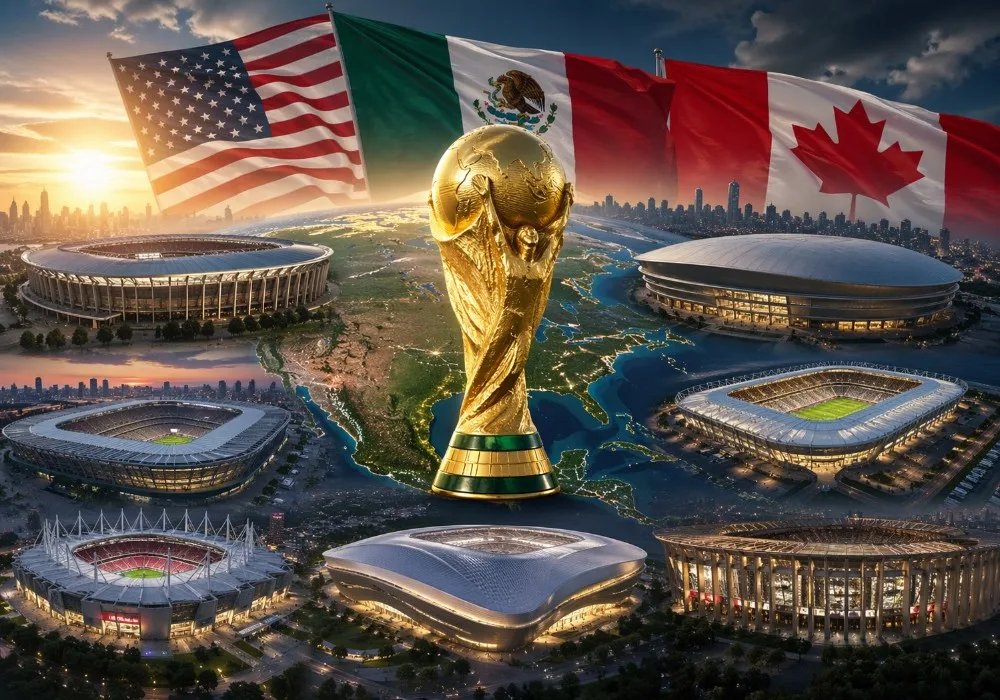
The 2026 FIFA World Cup stadiums include 16 venues across the United States, Canada, and Mexico. The tournament runs from June 11 to July 19, 2026, making it the largest edition in history with 48 teams and 104 matches.
Quick Answer:
The 2026 FIFA World Cup stadiums include 16 world-class venues across the United States (11), Canada (2), and Mexico (3), making it the first tournament hosted by three countries and the largest in history with 48 teams and 104 matches. Key stadiums include MetLife Stadium (final venue), Estadio Azteca (opening match), and major arenas like SoFi Stadium, AT&T Stadium, Mercedes-Benz Stadium, and Hard Rock Stadium, alongside Canadian venues BC Place and BMO Field, and Mexican stadiums Estadio BBVA and Estadio Akron.
2026 FIFA World Cup Stadiums
The 2026 FIFA World Cup stadiums will host the biggest football tournament ever staged. For the first time in history, three countries — United States, Canada, and Mexico — will jointly host the tournament.
Read more: 2026 FIFA World Cup Schedule: Full fixtures, dates, format explained
This expanded tournament introduces 48 teams, 104 matches, and 16 host stadiums across North America. The tournament will also feature multiple time zones, massive stadium capacities, and world-class infrastructure, making it one of the most ambitious sporting events ever planned.
Unlike previous tournaments, the 2026 edition will emphasize regional travel clusters, improved fan experience, and larger stadium capacities to accommodate the increased number of matches and fans.
Overview of 2026 FIFA World Cup Stadiums
The 2026 FIFA World Cup will be played across 16 stadiums, making it the largest venue lineup in tournament history. These venues were selected after a competitive bidding process that evaluated infrastructure, transportation, stadium capacity, and fan experience.
Most of the stadiums selected are modern venues regularly used for NFL matches, international football friendlies, and major entertainment events. This ensures that the tournament will benefit from top-tier facilities and global-standard infrastructure.
Host Countries
The tournament will be hosted by three countries:
United States (11 stadiums)
Mexico (3 stadiums)
Canada (2 stadiums)
This marks the first-ever tri-nation FIFA World Cup, creating a unique travel and cultural experience for fans worldwide.
Match Distribution
The match distribution across host nations reflects the size and infrastructure of each country:
United States — 78 matches
Canada — 13 matches
Mexico — 13 matches
The United States will host the majority of matches, including all games from the quarterfinal stage onward.
United States Stadiums
The United States will serve as the primary host nation, with 11 stadiums hosting matches throughout the tournament. These venues span across the East Coast, Central region, and West Coast.
East Coast Stadiums
MetLife Stadium (New York/New Jersey)
MetLife Stadium will host the 2026 FIFA World Cup Final, making it one of the most important venues of the tournament.
Located near New York City, the stadium offers excellent transportation access, modern facilities, and a massive seating capacity. It has previously hosted major events, including international football matches and global sporting spectacles.
Capacity: ~82,500
Matches: 8
Final: July 19, 2026
Lincoln Financial Field (Philadelphia)
Lincoln Financial Field will host several group-stage matches and potential knockout fixtures. Philadelphia is known for passionate sports fans and strong football culture, making it an exciting host city.
Gillette Stadium (Boston)
Gillette Stadium will host multiple matches, including a quarterfinal. The stadium has undergone upgrades to enhance fan experience and infrastructure.
Hard Rock Stadium (Miami)
Hard Rock Stadium will host several matches, including the third-place playoff. Miami’s international appeal and vibrant culture make it one of the most attractive host cities.
Central Stadiums
AT&T Stadium (Dallas)
AT&T Stadium will host the most matches during the tournament. Known for its massive size and advanced technology, it is one of the most impressive stadiums in the world.
Capacity: ~94,000
Matches: 9
Semifinal venue
NRG Stadium (Houston)
NRG Stadium features a retractable roof and will host multiple high-profile matches. Houston’s diverse population and strong sports culture make it a strategic host city.
Arrowhead Stadium (Kansas City)
Arrowhead Stadium is famous for its loud atmosphere and passionate fans. The venue will host key knockout matches, including a quarterfinal.
Mercedes-Benz Stadium (Atlanta)
Mercedes-Benz Stadium is one of the most modern stadiums in the world. Featuring a retractable roof and futuristic design, it will host one of the semifinals.
West Coast Stadiums
SoFi Stadium (Los Angeles)
SoFi Stadium is one of the newest stadiums globally and will host several high-profile matches. Its advanced technology and massive capacity make it a key venue.
Levi’s Stadium (San Francisco Bay Area)
Levi’s Stadium is a modern stadium known for sustainability and premium fan experience.
Lumen Field (Seattle)
Lumen Field is known for its loud atmosphere and enthusiastic supporters. It will host multiple group-stage matches.
Mexico Stadiums
Mexico will host three iconic venues and the tournament’s opening match.
Estadio Azteca (Mexico City)
Estadio Azteca is one of the most historic football stadiums in the world. It previously hosted the 1970 and 1986 World Cup finals and will host the 2026 opening match.
Estadio BBVA (Monterrey)
Estadio BBVA is one of the most modern stadiums in Latin America, offering premium seating and modern design.
Estadio Akron (Guadalajara)
Estadio Akron features a unique architectural design and will host group-stage matches.
Canada Stadiums
Canada will host two modern stadiums.
BMO Field (Toronto)
BMO Field will host Canada’s opening match and multiple group-stage matches. The stadium is expected to expand its capacity for the tournament.
BC Place (Vancouver)
BC Place features a retractable roof and modern facilities, making it ideal for hosting international matches.
Stadium Capacity Comparison
| Stadium | City | Country | Capacity (Approx.) | Matches | Key Highlight |
|---|---|---|---|---|---|
| MetLife Stadium | New York/New Jersey | USA | 82,500 | 8 | Final venue |
| AT&T Stadium | Dallas | USA | 94,000 | 9 | Most matches hosted |
| Mercedes-Benz Stadium | Atlanta | USA | 71,000 | 8 | Semifinal venue |
| SoFi Stadium | Los Angeles | USA | 70,000 | 8 | Newest stadium |
| Hard Rock Stadium | Miami | USA | 65,000 | 7 | Third-place match |
| NRG Stadium | Houston | USA | 72,000 | 7 | Retractable roof |
| Gillette Stadium | Boston | USA | 65,000 | 7 | Quarterfinal venue |
| Levi’s Stadium | San Francisco Bay Area | USA | 68,500 | 6 | Sustainable design |
| Lumen Field | Seattle | USA | 69,000 | 6 | Very loud atmosphere |
| Arrowhead Stadium | Kansas City | USA | 76,000 | 6 | Intense fan energy |
| Lincoln Financial Field | Philadelphia | USA | 69,000 | 6 | City skyline views |
| Estadio Azteca | Mexico City | Mexico | 87,000 | 5 | Opening match venue |
| Estadio BBVA | Monterrey | Mexico | 53,500 | 4 | Modern architecture |
| Estadio Akron | Guadalajara | Mexico | 49,000 | 4 | Volcano-inspired design |
| BMO Field | Toronto | Canada | 45,000 | 6 | Capacity expansion planned |
| BC Place | Vancouver | Canada | 54,000 | 7 | Retractable roof stadium |
2026 FIFA World Cup Host Nations Explained
United States
The United States will host the majority of matches and the knockout stages. Its large stadiums and strong infrastructure make it the central hub of the tournament.
Mexico
Mexico brings history and passion to the tournament, hosting the opening match and three iconic venues.
Canada
Canada’s involvement reflects football’s growth in North America, with modern cities and world-class facilities.
Regional Clusters
To reduce travel, venues are divided into three regions:
West
Vancouver, Seattle, San Francisco, Los Angeles, Guadalajara
Central
Dallas, Houston, Kansas City, Atlanta, Monterrey, Mexico City
East
Toronto, Boston, New York, Philadelphia, Miami
FAQs
How many stadiums will host the 2026 FIFA World Cup?
The 2026 FIFA World Cup will be played across 16 stadiums located in three countries. This makes it the largest World Cup venue lineup in history. The United States will host 11 stadiums, Mexico will host three, and Canada will host two. These venues were selected based on infrastructure, transportation, and fan experience, ensuring a world-class tournament across North America.
Which stadium will host the 2026 World Cup final?
The final of the 2026 FIFA World Cup will take place at MetLife Stadium in New York/New Jersey. This venue was selected due to its large capacity, accessibility, and experience hosting global sporting events. The stadium is expected to welcome tens of thousands of fans and millions of viewers worldwide.
Which country will host the most matches?
The United States will host the majority of matches, including knockout rounds and the final. This is largely due to the country’s large number of stadiums and strong infrastructure.
What is the biggest stadium in the 2026 World Cup?
AT&T Stadium in Dallas will be the largest venue, with a capacity of approximately 94,000 spectators. Its size and modern design make it ideal for hosting high-profile matches.
The 2026 FIFA World Cup stadiums represent a historic milestone in football. With 16 venues across three countries, the tournament promises to deliver one of the biggest sporting spectacles in history. Fans across North America will experience world-class stadiums, passionate atmospheres, and unforgettable football moments.